HOW WAS HALUYA-RUTI INTRODUCED TO SHAB-I-BARAT IN BANGLADESH?
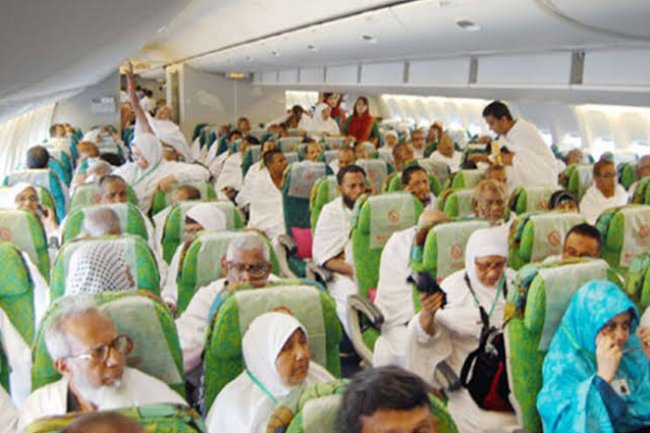
Shab-i-Barat, known to Muslims as the 'Most Holy Night'. In Bangladesh, on the night of Shab-e-Barat, many Muslims will pray in the mosque.

Akbar Hossain BBC Bangla, Dhaka May 1, 2018
Shab-i-Barat, known to Muslims as the 'Most Holy Night'. In Bangladesh, on the night of Shab-e-Barat, many Muslims will pray in the mosque. Another common and important accompaniment to this is making pudding at home and distributing it among the neighbors.

fig: Collected
In the society of Bangladesh, the issue of shab-i-barat inevitably comes down to the issue of making haluya-ruti. But the question is, how has this culture of making haluya-ruti been introduced in Bangladesh? Many of those who analyze the history of Islam think that the society of Bangladesh is a part of the larger Muslim Ummah. Muhammad Ibrahim, a professor of Islamic history and culture at Dhaka University, said Islam came to Delhi, India politically in the 11th century. At that time Islam also appeared in the then land of Bangladesh. Professor Muhammad Ibrahim said, "Even in the time of Rasoolullah Sahabah, his relatives in this subcontinent have come to different countries where Islam came from distant Arabia. Some indigenous elements have been added to them. It's a way of liking him. As a result, sweets have a popularity in Muslim society. " He thinks that there is a connection between making and distributing haluya-ruti during Shab-i-Barat and sharing the joy. "It has become customary to share the joy with others. It involves two things - religious sentiment and social protection," said Professor Ibrahim. Since there are ingredients for making pudding in Bangladesh, it has come. Basically; Halwa was introduced in the sweet sense. On the night of Shab-i-Barat, many Muslims pray. See also: In India, Sikhs and Hindus built mosques together In Bangladesh, 1600 people died in eight years due to lightning Uncover the mystery of the fragrance of roses The widespread practice of Shab-i-Barat in the land of Bangladesh began in the late 19th century. At that time the Nawabs of Dhaka used to observe Shab-i-Barat after many events, says historian Professor MuntasirMamun. He said that at that time the Nawabs of Dhaka used to light up during Shab-i-Barat. Then he would distribute sweets side by side. According to historians, since the sweet shop was not very popular at that time, the practice of making pudding at home with the ingredients of sweet national food started. Gradually it spreads. Professor Mamun has done research on the history of Dhaka. He said that due to the dominance of Hindus at that time, the Nawabs of Dhaka used to organize a lot of Shab-i-Barat to deal with it. It was an attempt to bring together the Muslim identity and dominance of the Nawabs of Dhaka. Professor Mamun said, "Since the Nawabs were Muslims and they controlled Dhaka, they attached importance to festivals. Through this, the three issues of Nawab's dominance, Muslim domination and religion were brought together." In the late 19th century, the observance of Shab-i-Barat in Dhaka emerged as a matter of Muslim identity. That is what Professor Mamun says. In that continuity, Shab-i-Barat has become a big festival. Professor Mamun mentioned that the observance of public holidays has increased during the Pakistan period. He said there was a time when the celebration of Shab-i-Barat in Dhaka was among Sunni Muslims. According to historians, Shab-i-Barat observance has become a part of religion and culture in present day Bangladesh. Many Muslims believe that the fate of the next year is decided on the night of Shab-i-Barat. According to him, there are many ideas about Shab-i-Barat. The most important of these is food and drink. Many people in the society of Bangladesh think that it is compulsory to make pudding and bread on the night of Shabe Barat. Also, many people think it is important to serve fish or meat in the diet. But Muhammad Abdul Latif, a professor in the Department of Islamic History at Dhaka University, said the culture of pudding was spreading in the Indian subcontinent.But in the eyes of Islam, it is not obligatory to eat it with Shab-i-Barat, he said.
Written by, Sayka Arifin Orpita
References (Information Collected)
Click Here to Visit