350-year-old Jinjira Palace
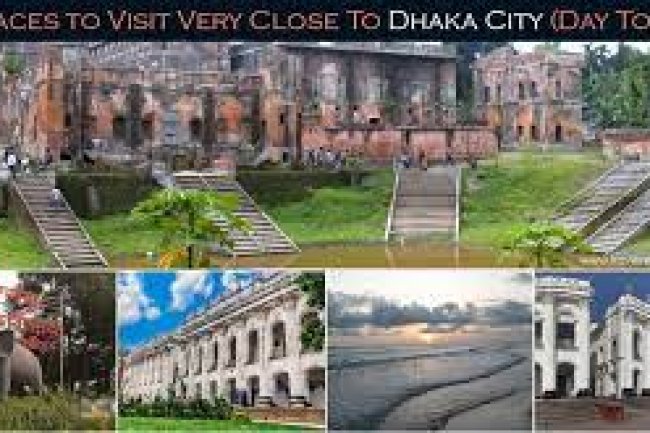
Jinjira Palace has been standing for three hundred and fifty years. This is a pattern of the Mughal period. Jinjira-jajira means island. Jinjira on the other side of the river Buriganga along the 'Boro Katra' Palace adjacent to Shoarighat. Nawab Ibrahim Khan, the then Subedar, built the Jinjira Palace 'Naoghra' on the island in 179-1898 AD.


Picture: collected
Jinjira Palace has been standing for three hundred and fifty years. This is a pattern of the Mughal period. Jinjira-jajira means island. Jinjira on the other side of the river Buriganga along the 'Boro Katra' Palace adjacent to Shoarighat. Nawab Ibrahim Khan, the then Subedar, built the Jinjira Palace 'Naoghra' on the island in 179-1898 AD. Jinjira Palace is historical antiquity. It is located a few hundred yards away on the other side of the river Buriganga in Dhaka city. The reason why the palace is specially discussed is that the family of Nawab Sirajuddaula was imprisoned here. In the conspiracy of Mir Jafar's son Miron, Siraj's mother Amena, aunt Ghaseti Begum, Siraj's wife Lutfunnesa, and their infant daughter were all imprisoned in the palace. Historian Nazir Hossain's book 'Legendary Dhaka' says that the family of Nawab Sirajuddaula was imprisoned in Jinjira Palace for 6 long years. Many of the Mughal rulers were exiled to this fort.Jinjira Palace is called Haveli or Hawli by the locals. The construction style of the palace has a lot of aesthetics. Although the construction style of the palace is in the form of 'Boro Katra', the rooms and size are much less. It has two parallel domes on the western side. And along the middle, there is another dome without a lid. In the eastern part of the palace, there is a roof in the shape of a Dochala hut. A staircase went down from the roof. Three special parts of this palace still survive today. Entrance arch, two separate palaces. The palace was built on a few acres of land mainly for leisure. In the middle of the surrounding water is a piece of island Jinjira. Indigenous trees including coconut-betel nut, mango-jackfruit, and greenery adorn the island. Jinjira Palace is a unique example of Mughal architecture. According to the locals, a tunnel was built at the bottom of the Buriganga to maintain the connection of the Lalbagh fort with Jinjira palace during the Mughal period. Mughal generals and officials used to come and go on this route.
There are rumors that there is a tunnel in Lalbagh fort. It is said that who goes that way into the tunnel once; He never comes back. Renowned British writer James Taylor in his book 'Topography of Dhaka' mentions Nawab Ibrahim Khan as the builder of Jinjira Palace.
How to get there
If you want, you can visit this palace with your family on holiday. You have to go to Sadarghat to cross the river Buriganga from Gulistan in Dhaka. After that, if you reach the Boro Katra adjacent to Swarighat, if you ask anyone, will show you the Jinjira Palace. Google map: click hereBehula-Laxmindar are still unfaded in Bengali folklore
Behula Laxmindar's 'Bashar Ghar' is an ancient and historical installation. It is located at Gokul village, 10 km north of Bogra city and 2 km south of Mahasthan Garh. Locally it is better known as 'Behular Bashar Ghar'. Many call it 'Lakshmindar's Medh'. This historical pillar is about 45 feet high. To the east of the pillar, there is a chamber with 24 angles. There is a stage with 162 square rooms. Excavations in 1934-36 have uncovered the foundations of a huge temple or mound here. This foundation is built in the style of building chambers by raising the level.
Picture: collected
In Behula's living room, 162 chambers were filled with soil on different floors and arranged from the bottom to the top in such a way that they could be used as the foundation of a tall temple or heap. Elevated to this level, the actual architectural style of construction on a multi-story parallel-leaning wall is a significant architectural feature of ancient Bangladesh. Along with this temple, some terracotta plaques of the later Gupta period (600-800 centuries) have been found. In the Sen period (1100-1200 centuries) a square temple with a porch was built here.
In this temple, a gold leaf with a portrait of a bull carved with a small stone block with many holes has been found. This suggests that it was a Shiva temple. According to current researchers, Behula's living room is an unimaginable monument. This monument is a Vaidya Math built by Devpal between 609 and 646 AD. This heap is not the bedroom. In the western half of this heap, there is a proverbial monument of Basharghar. In the eastern half, there is a bathroom with 24 angled basins. There was a well 6 feet deep in that bathroom. Here 162 cells were filled with soil on different floors and arranged in such a way that they were reduced from the bottom to the top so that they were no higher.
Folklore of Manasamangal Kavya
Lakhinder's father Chand Saudagar was a devoted worshiper of the Hindu god Shiva. So he did not worship any other god. On the other hand, Shiva's daughter Manasa was the serpent goddess. His father Shiva told him that if a Shiva worshiper first worships Manasa, then his worship in mortals is possible. Then Manasa selected Chand Saudagar and requested him to organize Manasa Puja. But Chand Saudagar did not agree to Mansa's proposal. Then Manasa became angry and cursed him - every boy of Chand Saudagar will be bitten by snakes. Thus all the sons of Chand Saudagar, except Lakhinder, died of snake bites one by one under the curse of Manasa. So during Lakhinder's marriage, his father built a house that could not be pierced by a snake. But overcoming all obstacles, a snake killed Lakhinder.According to the custom, the bodies of those who died from snake bites were floated in the river by raft. Behula ignoring anyone sat on the raft with her dead husband. They traveled for six months and traveled from village to village. At this point, the corpse began to rot and the villagers began to think of him as mentally unbalanced. Even then Behula continued to pray to Manasa. Later, when Behula agreed to worship her father-in-law Manasa, Lakhinder's life was restored. This archaeological history and folklore attract people very much. So visitors come to this place from home and abroad.
Writer: Fabiha Bushra
(Information collected)
Click Here to Visit